

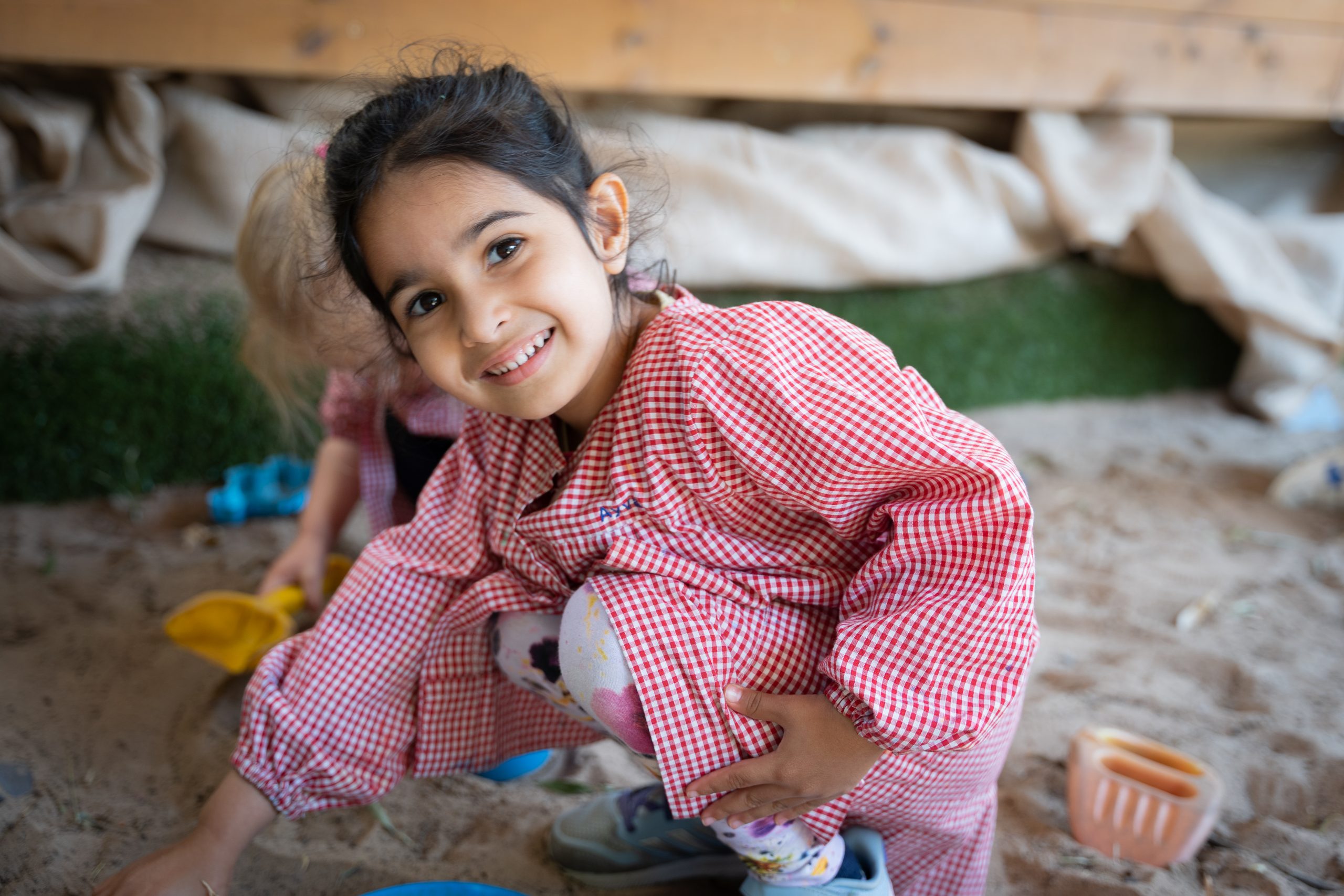
The early years of a child’s life are nothing short of magical. They are filled with wonder, discovery, and the kind of growth that happens at a pace we rarely witness again. For me, this stage has been a lifelong passion, a privilege, really, to be part of the foundations that shape a child’s future. Working alongside a dedicated and specialist team at our nursery in Twickenham, I’m reminded daily of just how extraordinary these early moments are.
In the quiet moments of infancy and the playful chaos of toddlerhood, something extraordinary is happening. Beneath the surface of finger painting, singing nursery rhymes, and listening to stories, the architecture of a child’s future is being built; neuron by neuron, habit by habit, experience by experience.
Harvard University’s Center on the Developing Child has well documented that a child’s brain develops more rapidly from birth to age five than at any other time in life. In fact, over 1 million new neural connections form every second during these early years. These connections lay the foundation for everything that follows, from language and literacy to emotional regulation and social skills. I often liken it to constructing a skyscraper: the quality of the foundation determines the strength of the entire structure.
Having taught in the USA, Hong Kong, and here in the UK, I have seen firsthand how universal the early years are in shaping a child’s trajectory. Across cultures and classrooms, one truth remains: the early years are the bedrock upon which everything else is built. Get it right, and you give a child the best possible start in life.
During these formative years, children are not just absorbing information, they are wiring their brains for how they will learn, relate, and respond to the world for the rest of their lives. Language acquisition, emotional regulation, and executive function (impulse control and decision-making) are all shaped early and the quality of interactions, warm, responsive caregiving, rich conversations, and exploratory play all directly influences cognitive and emotional development. When a toddler stacks blocks, they are learning about physics and problem-solving, when an adult names emotions, they are teaching emotional literacy and when a child hears and engages with stories they are building vocabulary, imagination, and empathy. These experiences lay the groundwork for formal education.
The 2024 evidence-based report UK Government Report ‘Strong Foundations in the First Years of School’ draws on research and analysis and has illuminated what we have known for a long time; ‘that high-quality early education is linked to academic achievement, health, and well-being'. Therefore, children who enter formal schooling with strong early foundations are more likely to thrive academically, socially, and emotionally.
Here are a few ideas on how to support healthy and strong brain development:
Talk and listen: Narrate your day, ask questions, and respond to your child’s cues.
Play together: Imaginative play builds creativity, problem-solving, and emotional understanding.
Read every day: Books introduce new words, ideas, and worlds.
Be emotionally present: Help your child to name and manage feelings.
Model behaviour: Children learn more from what we do than what we say.
Establish consistent routines and boundaries: these promote emotional security, cognitive growth, and healthy habits that shape lifelong learning and behaviour regulation.
As parents and teachers, we are not just caretakers; we are architects of possibility. Every hug, every word, every moment of shared wonder is a brick in the structure of a life.
- Dr Virginia Humpage, Pre School Year Group Leader